
 English
 Español
 Portugues
 Pусский
 العربية
 Türk dili
 Indonesia
 қазақ
қазақ فارسی
فارسی українська
 беларускі
 Filipino
 o'zbek
 български
 тоҷикӣ
 kiswahili
 Монгол
 አማራ
አማራ Ilocano
medium voltage capacitor protection
Medium Voltage Capacitor Protection Medium voltage (MV) capacitors are widely used in power systems for reactive power compensation, harmonic filtering, and voltage regulation. Due to their critical role, proper protection is essential to ensure safe and reliable operation. This involves safeguarding capacitors from electrical, thermal, and mechanical stresses that may arise during normal or fault conditions. Key Protection Requirements 1. Overcurrent Protection - Capacitors are susceptible to overcurrents caused by system faults, switching transients, or harmonic resonance. - High-speed fuses or overcurrent relays are typically used to interrupt excessive current before damage occurs. - Fuses must be selected based on the capacitor’s rated current and withstand capability. 2. Overvoltage Protection - Excessive voltage can lead to insulation breakdown or dielectric failure. - Voltage relays or surge arresters are employed to disconnect the capacitor bank if the voltage exceeds safe limits (typically 110% of rated voltage). 3. Unbalance Protection - In capacitor banks with multiple units, internal faults or degradation can cause unbalance in current or voltage. - Unbalance relays or neutral current monitoring detect such conditions and trip the bank to prevent cascading failures. 4. Overload and Thermal Protection - Prolonged overloading or high ambient temperatures can degrade capacitor life. - Temperature sensors or thermal overload relays monitor internal conditions and initiate shutdown if necessary. 5. Short-Circuit Protection - Internal faults or external short circuits can cause catastrophic failure. - Fast-acting fuses, circuit breakers, or differential protection schemes isolate the faulty section. 6. Harmonic and Resonance Protection - Capacitors can amplify harmonics or create resonance conditions, leading to overheating. - Harmonic filters or detuning reactors are used to mitigate these risks. Protection Coordination Proper coordination between protection devices is crucial to ensure selective tripping. For example, fuses should clear internal faults before upstream breakers operate. Additionally, protective relays must be set based on capacitor specifications and system conditions. Conclusion Effective protection of medium voltage capacitors requires a combination of overcurrent, overvoltage, unbalance, and thermal protection schemes. Proper device selection, coordination, and regular maintenance are essential to maximize capacitor lifespan and system reliability.
Sản phẩm
Danh mục:
-
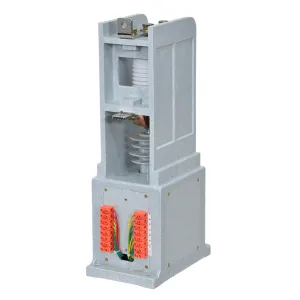
Công tắc tơ một cực VKG1-12 cho dàn tụ điện
Phân loại của họ: Công tắc tơ chân khôngLượt xem: 1497Số:Thời gian phát hành: 2025-09-05 09:32:14Công tắc tơ chân không JCZ7(G)12kV 400ADòng công tắc tơ chân không trung thế này sử dụng bộ ngắt chân không chất lượng cao, kết hợp với khung kim loại và các giá đỡ cách điện, mang lại hiệu suất ngắt tuyệt vời. Chúng phù hợp với các hệ thống mạng điện một pha hoặc hai pha dưới 6KV (7,2KV) và 10KV (12KV), cho phép chuyển mạch và ngắt quãng đường dài, khởi động thường xuyên và kiểm soát tải điện trở, cảm ứng và điện dung. Công tắc tơ chân không trung áp một cực dòng JCZ1 thường được sử dụng trong các ứng dụng bảo vệ nguồn như triệt tiêu hồ quang nguồn tín hiệu, nối đất trung tính hài và hộp tải....
Tin tức
Danh mục:
Không có kết quả tìm kiếm!
Trường hợp
Danh mục:
Không có kết quả tìm kiếm!
Video
Danh mục:
Không có kết quả tìm kiếm!
Tải về
Danh mục:
Không có kết quả tìm kiếm!
Tuyển dụng
Danh mục:
Không có kết quả tìm kiếm!
Sản phẩm được đề xuất
Không có kết quả tìm kiếm!



 Điện thoại